Views: 0 Author: Site Editor Publish Time: 2026-06-03 Origin: Site


Applying liquid fertilizers or agricultural chemicals across large properties demands serious physical effort. Manual application feels incredibly labor-intensive for most operators. It also scales poorly across expansive acreage or commercial turf. Pre-mixing concentrated chemicals exposes users to unnecessary toxic risks. You need a smarter, completely hands-free dilution method. A high-quality hose end sprayer effectively solves these critical inefficiencies. It leverages your existing water pressure to automatically siphon, dilute, and dispense chemicals. Integrating these smart sprayers directly into packaging offers immense usability advantages for chemical brands. This guide breaks down the technical mechanisms behind these devices. We explore key evaluation criteria and real-world implementation realities. You will learn how to select the most reliable, accurate, and ergonomic system for your specific application needs. Expect actionable insights on calibration, maintenance, and safety protocols. These proactive techniques will thoroughly protect both your landscape and your operators.
Direct-Attach Efficiency: Quality sprayers eliminate pre-mixing by threading directly onto concentrate bottles, minimizing physical contact with agricultural chemicals.
Mechanism Matters: Understanding the difference between dip-tube (siphon) and non-dip-tube (overflow) systems is critical for preventing uneven chemical application.
Precision is Non-Negotiable: Adjustable dials with fixed ratio settings (e.g., 1:100 to 1:5) prevent chemical waste and turf burn compared to dial-less models.
Ergonomics Drive Adoption: Locking triggers and anti-drip gaskets resolve the most common user complaints: hand fatigue and chemical leakage.
Water passing through the nozzle generates a specific physical reaction. We call this the Venturi effect. A restriction inside the nozzle causes the water stream to accelerate. This rapid movement creates a localized vacuum instantly. The vacuum naturally pulls the chemical concentrate upward. It travels from the reservoir straight into the upper mixing chamber. The system blends the chemical perfectly into the water stream. This precise blending happens milliseconds before the liquid leaves the nozzle.
This mechanism uses a physical plastic tube. The tube reaches all the way down to the bottom of the container. It draws liquid continuously as you spray the area. You maintain a highly consistent chemical-to-water ratio. This vital consistency lasts from the first squeeze to the final drop. We strongly recommend this exact design for precise agricultural applications. Precision prevents devastating turf chemical burns.
This system removes the internal siphon tube entirely. Instead, incoming water fills the chemical reservoir directly. It mixes internally and overflows through the front exit nozzle. The concentration always starts exceptionally high. It gradually weakens as clean water constantly dilutes the remaining chemical. You must move rapidly and repeatedly over the target area. This rapid physical movement ensures relatively even coverage across the grass.
Optimal siphoning relies heavily on consistent water pressure. Standard residential or commercial water lines provide 45 to 60 PSI. This standard pressure range powers the Venturi vacuum perfectly. Lower pressure can easily cause dangerously inaccurate dilution. A weak stream completely fails to draw thick chemicals upward. You end up spraying mostly plain water. Always test your local spigot pressure before widespread chemical application.
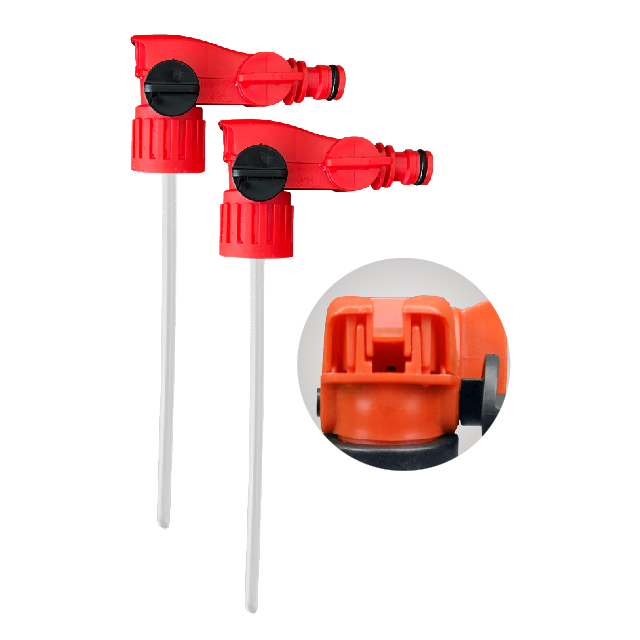
We must evaluate specific hardware features before choosing a hose end sprayer. Let us examine fixed rate versus adjustable flow control.
Fixed Rate models come pre-calibrated directly from the factory. They dispense a single, specific chemical ratio constantly. They work perfectly for proprietary liquid fertilizer packaging. User error must remain minimal in these retail situations. The user simply attaches the hose and begins spraying. Adjustable Dials handle diverse, multi-use scenarios perfectly. You need clearly marked, notched dial settings. Good dials show ounces per gallon plainly. These precise notches prevent massive chemical waste. Over-application frequently ruins entire lawns when using cheap, uncalibrated equipment.
Consider the actual neck size of the chemical bottle. Prosumer buyers absolutely hate decanting dangerous chemicals. Pouring toxic liquids manually increases accidental exposure risks. Bypassing the included 16 oz or 32 oz reservoir saves significant time. Users love threading the sprayer directly onto standard quart-sized concentrate bottles. This direct-attach capability provides a major safety advantage for operators.
You need adjustable spray tips for different landscape elements. A fine mist protects delicate floral foliage beautifully. A wide shower covers expansive flat lawns quickly. A zero-degree stream reaches towering 30-foot tree canopies easily. Versatility defines commercial-grade equipment.
Targeting the "Leaky Fitting" Problem. The hose connection represents the primary point of absolute failure. Cheap models leak raw chemicals straight down your arm. Evaluate sprayers based strictly on heavy-duty rubber O-rings. You also need internal anti-drip valves integrated inside. Look for standard 1-inch or ⅝-inch hose compatibility ratings. Proper brass fittings often eliminate frustrating leaks completely.
Addressing Clogging with High-Viscosity Liquids. Thick organic fertilizers frequently ruin standard delicate filters. Fish emulsion often feels thick and extremely sludgy. "Pro-line" viscous chemicals frequently block tiny uptake tubes. You mitigate this serious risk by selecting easily removable filters. Cleanable in-line screens save immense operator frustration in the field. Wider uptake tubes allow thick organic fertilizers to pass smoothly.
Best Practice: Always run warm, clean water through the dip tube immediately after applying organic sludges. This quick flush prevents residue from drying and hardening inside the narrow plastic channel.
Solving Operator Fatigue. Continuous thumb-depression triggers cause severe forearm cramps quickly. Large-scale turf applications take significant uninterrupted time. Your hands will tire rapidly using basic spring triggers. Prioritize models featuring robust continuous-spray locking mechanisms. Ergonomic, low-resistance valves make a huge physical difference. A simple locking switch completely transforms the user experience.
Professionals follow strict protocols to maximize chemical efficiency. Haphazard spraying wastes expensive liquid products. Follow this rigorous methodology for perfect application.
Measure & Calculate: Determine the exact square footage of your target turf area. Calculate the precise ounces of concentrate needed for the job. This strictly prevents costly over-purchasing. It entirely eliminates excess chemical waste.
Dial Calibration: Set the specific dilution ratio accurately on the dial head. Choose your exact setting (e.g., Setting "A" for 1 oz per 100 oz of water). You must complete this step before turning on the water source.
Application Geometry: Use a downward fan spray for broadcast turf treatments. Invert the nozzle strictly for upward under-leaf canopy applications. Many modern sprayers support this inverted multi-angle dispensing.
Deep-root fertilizers require exceptionally strong soil penetration. Stubborn weeds naturally repel water from their waxy leaves. Pre-mixing a compatible surfactant easily solves this frustrating issue. Add the surfactant directly into the concentrate reservoir tank. The surfactant breaks the tough soil or leaf surface tension. The chemical absorbs immediately rather than beading up harmlessly.
Let us look at a transparent mathematical flow rate example. Dispersing 12 oz of chemical at a 100:1 ratio demands significant water volume. You will require roughly 9.3 gallons of clean water. This entire volume must pass through the hose end sprayer. Understanding this volume helps operators pace their walking speed properly. Walking too slowly severely over-saturates the local turf.
Dial Ratio Setting | Chemical Amount (oz) | Required Water Volume (Gallons) | Coverage Speed Required |
|---|---|---|---|
1:10 (Heavy) | 10 oz | ~0.78 Gallons | Fast / Brisk Walk |
1:50 (Medium) | 10 oz | ~3.9 Gallons | Moderate Walk |
1:100 (Light) | 10 oz | ~7.8 Gallons | Slow / Methodical Sweep |
The Closed-System Burst Hazard. Never attach these pressurized sprayers in-line with closed sprinkler systems. Avoid using automated water timers downstream from the unit. Dead-heading the water pressure causes severe internal accumulation inside the reservoir. This excessive pressure results in a catastrophic tank rupture. You will create a massive, highly toxic chemical spill instantly. Always maintain an open flow path when operating these tools.
Common Mistake: Forgetting to bleed the line pressure before unscrewing the reservoir. This amateur mistake forcefully sprays concentrated chemical residue directly onto your unprotected hands and face.
Wind Drift and Elevation Risks. Treating tall trees requires the high-pressure zero-degree "jet" setting. The applicator must actively account for daily wind shear. Sudden gusts easily blow toxic chemical drift backward. This fine chemical drift covers the operator completely. Always spray the canopy at an acute angle. Never point the nozzle directly overhead while standing underneath.
Safe Disconnect Procedures. Disconnecting pressurized equipment demands a very strict safety routine. First, turn the sprayer dial firmly to the "OFF" position. Next, shut off the main spigot completely. Finally, depress the trigger one last time. This simple physical action bleeds the trapped line pressure immediately. You can now unscrew the unit safely without sudden chemical splash-back.
Base your final hardware decision strictly on your chemical viscosity requirements.
Prioritize dip-tube systems for high-precision agricultural jobs, and overflow systems for general turf care.
Evaluate the total scale of your job to ensure trigger ergonomics prevent severe operator fatigue.
Audit your current liquid fertilizer packaging inventory to confirm thread compatibility with direct-attach models.
Select commercial-grade adjustable units equipped with dedicated HDPE reservoirs for versatile, long-term farm use.
A: Siphon mechanisms often experience a brief 1-2 minute fill-time delay before drawing liquid. If nothing happens after this delay, inspect the internal dip tube. Viscous chemicals easily clog narrow tubes or in-line filters. Ensure your home water pressure reaches at least 45 PSI. Low pressure completely fails to create the required vacuum for siphoning.
A: We strongly advise against this practice due to extreme cross-contamination risks. Trace herbicide residue left inside the reservoir or dip tube will easily kill sensitive plants during your next fertilizer application. You should maintain separate, clearly labeled sprayers. If you must share one, mandate a strict triple-rinsing protocol.
A: First, carefully return any unused concentrate back into its original, sealed bottle. Next, fill the empty reservoir with clean tap water. Reattach the unit to your hose and spray it over a safe driveway area until the water runs completely clear. This flushes the internal Venturi mechanism perfectly.


