Views: 0 Author: Site Editor Publish Time: 2026-05-13 Origin: Site


Scaling liquid applications across large lawns or gardens often leads to operator fatigue. Manual pump sprayers waste time. They drain your energy during expansive yard work. Mixing fertilizers or biostimulants in small batches slows down your weekend projects.
While a hose end sprayer solves this speed problem by leveraging residential water pressure, it introduces new risks. Imprecise dilution and over-application remain common user issues. Confusing label ratios often frustrate beginners. You might accidentally burn a lawn if you miscalculate. You could also leave untreated yard patches.
This guide breaks down the physical mechanics behind these popular garden tools. It clarifies the complex math behind concentration ratios and application rates. You will find a solid decision framework to determine if this equipment matches your specific lawn care or gardening requirements.
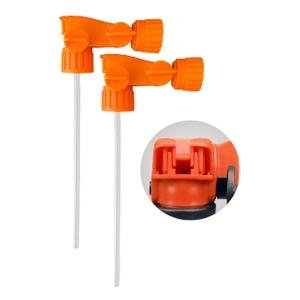
Mechanism: Hose end sprayers utilize the Venturi siphon effect, using water pressure to create a vacuum that pulls and mixes concentrate from the bottle.
Decision Rule: Optimize for speed (large lawns, gentle fertilizers, foliar feeding) with a hose end sprayer. Optimize for precision (selective herbicides, fungicides) with a backpack sprayer.
Math Simplified: Focus on the "application rate" (e.g., ounces per 1,000 sq ft) rather than the "concentration" to determine exactly how much product to pour into the reservoir.
Hardware Limitations: Output consistency is highly dependent on home water pressure, walking speed, and slope angles.
The Venturi effect drives this tool. Fast-moving water creates a low-pressure zone. This vacuum pulls liquid up a tube. It mixes the concentrate directly into the water stream. We see this same principle in everyday household items.
Think about a standard glass cleaner spray bottle. You pull the trigger. Moving air rushes over a small plastic tube. The fast air creates a vacuum. It pulls the liquid cleaner up the tube. A hose end sprayer uses municipal water flow instead of moving air. The water pushes through the nozzle. It sucks the liquid chemical from the reservoir. The mixture then exits the spray head.
The physical size of the siphon hole matters deeply. It dictates your suction rate. Manufacturers drill specific aperture sizes. These tiny holes determine how many ounces of chemical pull into each gallon of water.
Some models use fixed holes. Other models feature adjustable internal dials. These dials change the aperture size mechanically. A larger hole pulls more concentrate into the water stream. A smaller hole restricts the liquid flow. This mechanical design defines your final chemical concentration.
This tool assumes you have standard home water pressure. Optimal suction happens between 40 and 60 PSI. Drops in water pressure ruin the mixture ratio. Using a garden hose longer than 100 feet reduces your PSI. Friction inside the hose slows the water down.
Spraying uphill also causes major pressure drops. Gravity fights the water flow. Less water pressure means less vacuum force. You end up applying a weaker chemical mixture. Always consider your property elevation before relying on siphon-based equipment.
You should frame this tool as a speed and convenience asset. It is not a precision instrument. Understanding this distinction prevents costly yard mistakes. We must categorize applications by their risk level.
Broad applications benefit immensely from siphon equipment. Liquid fertilizers and biostimulants fall into this category. Humic acid and kelp extracts require high water volume. A hose end sprayer excels here. You can cover large garden beds in minutes.
Foliar feeding is another perfect match. Leaves absorb nutrients rapidly. You spray liquid fertilizer directly onto the plant canopy. The gentle shower setting coats leaves evenly. Exact dosing margins remain forgiving. Minor over-application rarely harms the plants. You save hours compared to manual watering cans.
Selective herbicides demand extreme precision. Pre-emergent chemicals create a protective barrier in the soil. Targeted fungicides protect vulnerable turf from disease. We strongly advise against using hose attachments for these high-risk tasks.
You lack precise edge control. Overspray easily kills non-target plants. Fluctuating water pressure alters dilution rates constantly. You might burn your lawn in low-pressure spots. You might also leave untreated weed patches. The risks outweigh the time savings.
Backpack sprayers offer the elite-level precision required for high-risk chemicals. They require manual tank mixing. They also cause operator weight fatigue. However, they deliver exact chemical doses regardless of walking speed or municipal water pressure.
Below is a quick comparison chart detailing the primary differences between these two spraying methods.
Feature | Hose End Sprayer | Backpack Sprayer |
|---|---|---|
Primary Advantage | Maximum speed and zero weight fatigue. | Elite precision and exact chemical dosing. |
Best For | Fertilizers, biostimulants, large foliar feeding. | Herbicides, pre-emergents, fungicides. |
Water Source | Requires active municipal hose connection. | Carries pre-mixed water in a heavy tank. |
Edge Control | Poor. High risk of overspray. | Excellent. Precise wand application. |
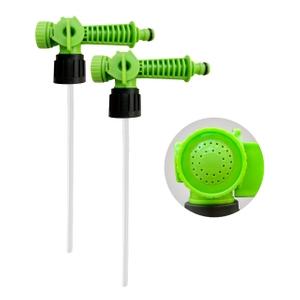
Labels confuse almost everyone. Manufacturers often print confusing instructions. They mention "ounces per gallon" and "ounces per 1,000 square feet" in the same paragraph. You must understand the conceptual difference.
Concentration refers to the chemical ratio leaving the nozzle. It measures how much product mixes into one gallon of water. Application rate refers to total volume. It defines how much active ingredient a specific land area requires. You should focus strictly on the application rate.
Follow this step-by-step math framework. It prevents over-application.
Measure total square footage: Break your yard into simple rectangles. Multiply length by width. Assume you have a 3,000 sq ft lawn.
Identify the application rate: Read the manufacturer label. Look for the land area dosage. Assume the label requires 4 oz per 1,000 sq ft.
Multiply to find total concentrate: Multiply your yard size by the application rate. For a 3,000 sq ft lawn, multiply 3 by 4. You need 12 oz of total chemical.
Pour the concentrate: Pour exactly 12 oz of pure chemical into the sprayer jug. Ignore the water volume temporarily. The tool will mix the water automatically.
Walking speed dictates application success. You need visual feedback while walking. Try this common industry trick.
Pour your 12 oz of chemical into the jug. Next, add 12 oz of plain water to the jug. You now have 24 oz of fluid inside the reservoir. This increases the visual volume. You begin walking your lawn. When the jug is half empty, you should be exactly halfway done covering your yard. This added water does not change the total chemical applied to the soil. It simply gives you a larger visual gauge.
Not all models perform equally. You must evaluate specific hardware features before making a purchase. Your physical strength and yard size dictate the best model.
Models feature either built-in dilution dials or fixed-rate tops. Dial models often provide 14 different settings. You turn the dial to match the required ratio. Dials offer massive versatility. You swap between fertilizers and pest control products rapidly.
Fixed-rate models lack dials. They pull concentrate at one permanent speed. These require manual calculation and pre-mixing in the jug. Fixed-rate models usually last longer because they contain fewer moving parts. However, they lack user convenience.
Industry standards frame reservoirs between 16 and 32 ounces. You should match the capacity to your project size.
32-Ounce Reservoirs: Best for expansive lawns and large trees. You minimize your refill trips. Keep in mind that a full 32-ounce jug weighs over two pounds. This causes severe wrist strain during long sessions.
16-Ounce Reservoirs: Best for elevated flower beds and tight garden spaces. The lighter weight improves maneuverability. You refill more often, but your wrist avoids fatigue.
Optimal performance requires sufficient water flow. We recommend using a 5/8-inch diameter garden hose. A smaller 1/2-inch hose restricts fluid dynamics. It drops your PSI below optimal levels. A larger 3/4-inch hose becomes too heavy to drag across wet grass.
You should also install quick-connect fittings. These brass or plastic adapters snap onto your tool instantly. Quick connectors eliminate the frustrating process of threading wet equipment together.
Evaluate models offering adjustable nozzle patterns. Different plants require different water impacts.
Flat Fan Pattern: Shoots a wide, horizontal sheet of water. Best for broadcast lawn coverage.
Shower Pattern: Drops a gentle mist. Best for delicate garden foliar feeding. It prevents flower petal damage.
Jet Pattern: Shoots a concentrated stream. Best for reaching high tree canopies. It penetrates dense foliage easily.
Proper operation requires strict safety protocols. You must manage chemical handling carefully. Follow these best practices to ensure consistent results.
Never start your hose with the chemical dial engaged. You risk dumping pure concentrate onto a single spot. Use the "Water Only" prime step instead.
Set your device dial to "Water Only". Turn on your municipal spigot. Aim the nozzle safely away from delicate plants. Squeeze the trigger to start the hose flow. Wait for the water stream to stabilize. Once you establish a steady walking pace, flip the dial to the "On/Mix" position. This ensures a perfectly even chemical distribution from your very first step.
Your walking speed directly dictates the final application rate. Walking too slowly applies excessive chemical. Walking too quickly starves the soil of nutrients. You must calibrate your walking pace.
Mark out a 1,000 sq ft test area on your driveway or lawn. Fill your reservoir with plain water. Set the dial to your desired mixture rate. Walk the test area. Check your reservoir visually. Did the exact right amount drain out? If it drained too fast, you must walk faster. Many professionals use a metronome app on their phones to maintain a steady 2.5 miles per hour walking pace.
Cross-contamination destroys gardens. Spraying fertilizer through a tool previously used for weed killer will destroy your flower beds. You must clean the equipment thoroughly after every single use.
We recommend a verifiable cleaning standard. Mix 1 ounce of household bleach into 1 gallon of water. Pour this mixture into a bucket. Detach the spray head from the reservoir jug. Submerge the siphon tube into the bleach bucket. Connect your garden hose. Run the tool until it pulls the entire bleach mixture through the internal chambers. Follow this with a pure water flush. This neutralizes residual chemicals and prevents cross-contamination.
A hose end sprayer serves as an indispensable, time-saving asset for broad applications. It dominates tasks involving gentle fertilizers and foliar feeding. However, it cannot fully replace the elite precision of a pump or backpack sprayer. You must respect its limitations regarding edge control and pressure fluctuation.
Measure your application area carefully today. Audit your current chemical inventory. Separate your high-risk herbicides from your forgiving fertilizers. Finally, select a sprayer featuring an adjustable dial and a comfortable reservoir size to maximize your yard maintenance versatility.
A: Yes, but with caution. Slopes can affect water pressure and the angle of the siphon tube, potentially causing uneven chemical draw. Uphill spraying reduces your water PSI. This drops the vacuum force inside the mixing chamber. Always walk horizontally across slopes rather than directly up and down them.
A: Address common user errors first. You might be walking too slowly across the yard. You may have selected incorrect dial settings. Excessively high home water pressure can also accelerate the suction rate. Try walking faster or selecting a lower dilution ratio on the dial to compensate.
A: For dial-based sprayers, you pour pure concentrate directly into the reservoir. The tool mixes the water automatically. For fixed-rate sprayers, manual dilution in the jug may be required based on the manufacturer's specific formula. Always check if your specific model requires manual pre-mixing.


