Views: 0 Author: Site Editor Publish Time: 2026-08-23 Origin: Site


Applying liquid fertilizers, herbicides, and pesticides requires exact delivery mechanisms. Improper application leads directly to chemical waste, environmental runoff, and ineffective pest control. Property owners, orchard operators, and agricultural managers frequently struggle to match their application equipment to the specific demands of their terrain. This mismatch results in severe physical fatigue from manual pumping, awkward maneuverability across uneven ground, or highly inaccurate chemical dilution from automated siphoning systems. Resolving this operational bottleneck requires a strict technical evaluation of delivery methods. This guide contrasts the manual, high-pressure precision of a trombone sprayer with the high-volume, continuous-flow mechanics of a hose end sprayer. We will evaluate fluid dynamics, dilution accuracy, and operator ergonomics to determine the optimal tool for specific application requirements.
Precision vs. Volume: Trombone sprayers offer exact, pre-mixed chemical dilution ideal for targeted applications, whereas hose end sprayers prioritize rapid, broad-area coverage at the cost of strict dilution accuracy.
Vertical Reach: The reciprocating pump action of a trombone sprayer generates superior PSI, making it the standard for reaching tree canopies (up to 25–30 feet) without motorized equipment.
Mobility Constraints: Hose end sprayers are strictly limited by the length and awkward maneuverability of a garden hose, while trombone sprayers are limited only by the operator's ability to transport the chemical bucket.
Ergonomic Trade-offs: Hose end sprayers require minimal physical exertion; trombone sprayers demand continuous, two-handed physical labor that limits their viability for large-scale projects (typically recommended for 20 trees or fewer).
You must assess whether the primary application target is vertical or horizontal. Vertical targets include mature orchards, tall ornamentals, and dense privacy hedges. These require equipment capable of fighting gravity. The physics of spraying vertically demand high fluid velocity and specific droplet sizes to prevent wind drift while ensuring deep canopy penetration. Horizontal targets include turfgrass, large garden beds, and ground cover. Flat terrain demands wide spray patterns and continuous flow. Identifying the application axis dictates the necessary pressure output. High vertical reach requires concentrated, high-PSI streams. Horizontal coverage relies on broad, sweeping fan patterns that overlap slightly with each pass to ensure uniform distribution.
Evaluating the margin of error for your chemicals is mandatory before selecting a delivery system. Highly sensitive selective herbicides require exact dosing. A slight over-concentration can destroy surrounding vegetation and contaminate the soil profile for months. Fungicides and dormant oils also demand precise application rates to prevent foliar burn on sensitive new growth. Conversely, organic kelp fertilizers and humic acid supplements tolerate rough dilution ratios. Nematode applications prioritize water volume over exact chemical metering, as the goal is to wash the microscopic organisms deep into the root zone. You must match the delivery tool to the chemical's sensitivity. Precision tools handle volatile chemicals. Volume tools handle forgiving organic supplements.
Determining the total square footage establishes baseline equipment requirements. You must also count the exact number of trees requiring treatment. Scale directly impacts flow rate necessities, operator stamina limits, and equipment maneuverability needs. Treating five dwarf fruit trees requires entirely different logistics than treating a half-acre of Bermuda grass. Manual pumping becomes physically unsustainable over large areas due to lactic acid buildup in the operator's shoulders. Dragging heavy rubber hoses becomes impossible in dense, wooded lots with numerous snag hazards. Operational scale defines the physical limits of your chosen application method.
Measure the maximum vertical height of the target canopy using a laser measure or visual estimation.
Calculate the total square footage of horizontal turf or soil to determine total fluid volume requirements.
Identify physical obstacles like retaining walls, thorny bushes, or delicate flower beds that restrict hose movement.
Review the chemical manufacturer's label for strict dilution tolerances and required application methods.
The slide-action mechanism utilizes a dual-action piston housed within a metal cylinder. You operate it by pushing and pulling the handle in a continuous rhythmic motion. This action draws liquid from an external, unpressurized bucket. A weighted suction hose drops directly into the chemical mixture. The internal check valves open and close in sequence, allowing the pump to expel liquid under high pressure on both the push and pull strokes. This continuous pressurization eliminates the need for a sealed pressure tank. The operator acts as the engine. The speed and force of the pumping motion dictate the output pressure. Faster, harder strokes generate higher PSI, propelling the liquid further.
Standard manufacturing materials prioritize longevity and chemical resistance. Quality units feature solid brass cylinders that resist the corrosive nature of agricultural chemicals. They utilize heavy-duty Viton O-rings to maintain internal seals under high pressure. Adjustable brass nozzles allow operators to switch from a fine mist for foliar feeding to a solid stream for canopy penetration. These materials withstand harsh synthetic fertilizers and resist degradation from dormant oils. Industry benchmarks illustrate this standard design. A well-maintained brass Trombone Sprayer offers exceptional reliability across decades of seasonal use, outlasting cheaper plastic alternatives by a wide margin.
Solid brass pump cylinders for maximum burst strength and corrosion resistance.
Viton or heavy-duty rubber O-rings to prevent chemical bypass and maintain pressure.
Weighted brass strainers attached to the suction hose to prevent debris intake.
Adjustable nozzle tips capable of transitioning from a 30-foot stream to a 3-foot cone mist.
This tool excels in specific, targeted scenarios where precision and reach are non-negotiable. It is the primary choice for dormant oil applications on fruit trees during the late winter. The high pressure penetrates thick bark crevices where overwintering insects hide. It handles targeted insecticide spraying in dense canopies effectively. The forceful stream pushes past exterior leaves to coat interior branches and the undersides of foliage. It dominates scenarios requiring exact, static chemical mixing. You mix the exact ratio in a bucket beforehand. This guarantees the chemical concentration remains consistent from the first drop to the last, ensuring predictable results.
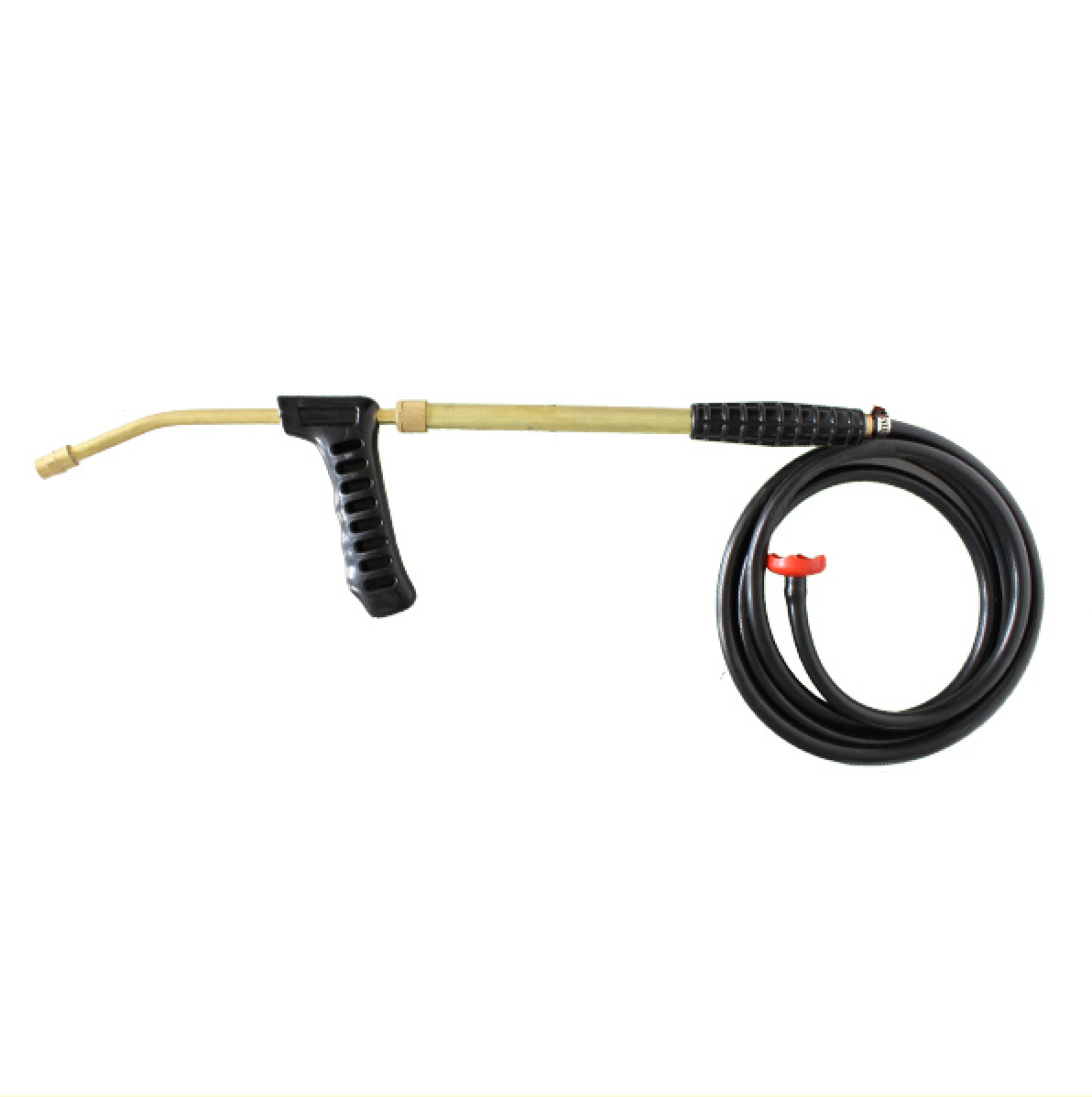
This device relies entirely on fluid dynamics, specifically the Venturi effect. Water pressure from a standard garden hose creates a vacuum inside the sprayer head. As water rushes past a small internal orifice, it creates a low-pressure zone that draws chemical concentrate upward through a siphon tube. The concentrate moves from the attached plastic bottle directly into the water stream. The two liquids mix at the nozzle exit before being broadcast over the target area. The operator does not pump or pressurize the unit. The municipal water supply or well pump provides all the necessary propulsion. You simply squeeze the trigger or turn the thumb valve to initiate the flow.
Adjustable dials attempt to meter the concentrate-to-water ratio. You set the dial to a specific rate, such as two ounces per gallon. However, several field variables disrupt this intended accuracy. Fluctuating municipal water pressure changes the vacuum strength instantly. If a well pump cycles on and off, the dilution rate alters with the pressure spikes and drops. Concentrate viscosity also heavily impacts the draw rate. Thick, syrupy fertilizers pull much slower than watery herbicides. Cold weather increases fluid viscosity, further reducing the draw rate. These variables make dial settings an approximation rather than an exact scientific measurement.
This tool provides rapid, broad-area coverage with minimal physical effort. Its primary utility involves broadcasting liquid fertilizers over large lawns where exact dosing is less critical than total volume. It effectively distributes beneficial nematodes across expansive soil areas, using the high water volume to wash the organisms into the soil profile. It handles broadleaf herbicides over unobstructed turfgrass efficiently. Speed is prioritized over pinpoint accuracy in these scenarios. The high water volume acts as a carrier. It drenches the soil quickly. This method suits applications where soaking the ground matters more than coating individual leaves with a highly concentrated chemical.
Delivery Method Comparison Chart
Feature | Trombone Mechanism | Hose End Mechanism |
|---|---|---|
Dilution Accuracy | 100% Exact (Pre-mixed in bucket) | Variable (Depends on water pressure) |
Vertical Reach | 25 to 30 feet | 10 to 15 feet |
Mobility | High (Bucket carry only) | Low (Restricted by hose length) |
Physical Fatigue | High (Continuous manual pumping) | Low (Trigger squeeze only) |
Best Application | Orchards, tall trees, precise chemicals | Turfgrass, large flat lawns, soil drenching |
The manual slide-action tool achieves absolute dilution accuracy. The operator pre-mixes the exact ratio in a static bucket prior to application. You control the water and the chemical volumes precisely using measuring cups. There is zero risk of in-line dilution variance because the mixing phase is entirely separated from the application phase. This makes it ideal for harsh chemicals that require strict adherence to label rates. You know exactly what concentration hits the plant, eliminating the risk of under-dosing pests or over-dosing sensitive foliage.
The siphoning tool is prone to the guessing game effect. Dilution rates fluctuate based on hose PSI, hose diameter, and water volume. You cannot guarantee exact dosing. However, the high volume of water acts as a safety buffer. It heavily dilutes the product upon exit. This reduces the risk of chemical burn on turfgrass during broad applications. The sheer volume of water forgives minor concentration errors, making it suitable for consumer-grade fertilizers and soil amendments where a margin of error is acceptable.
Manual force generates exceptionally high PSI. This allows for a concentrated stream that can reach 25 to 30 feet vertically. You can penetrate thick foliage easily. It reaches upper branches without requiring ladders, keeping the operator safely on the ground. The operator controls the pressure directly. Harder pumping yields longer reach. This makes it superior for mature property maintenance, specifically for treating the upper canopies of shade trees and established fruit orchards.
Vertical reach for siphoning tools is strictly dictated by the property's static water pressure. Most residential hoses output between 40 and 60 PSI. This typically struggles to maintain a cohesive stream beyond 10 to 15 feet vertically. The stream breaks apart into a mist too early due to air resistance and gravity. This severely limits its use for mature trees or second-story rooflines. Attempting to spray high targets with a hose attachment usually results in the chemical mist drifting back onto the operator.
Bucket-fed systems are highly mobile in terms of routing. You have no hose to drag. You will not snag equipment on landscape obstacles, delicate garden beds, or retaining walls. You can walk deep into wooded lots or navigate tight greenhouse aisles freely. However, scalability is bottlenecked. You must manually carry the heavy chemical bucket. A five-gallon bucket weighs roughly 40 pounds. Moving this across uneven terrain limits the total coverage area and slows down the application process significantly.
Hose-attached systems are highly scalable for continuous horizontal coverage. You never stop to refill a heavy bucket. You can spray until the concentrate bottle is empty, covering thousands of square feet in minutes. However, mobility is severely restricted. Dragging a heavy, water-filled rubber hose is notoriously awkward. It crushes delicate plants around corners. It gets caught on tree roots, rocks, and patio furniture. Your operational range ends exactly where your hose ends, requiring multiple spigots for large properties.
Slide-action pumping requires continuous, repetitive upper-body motion. The push-pull reciprocating action demands significant physical exertion from the arms, shoulders, and core. The fatigue factor is very high. Your upper body bears the entire workload of pressurizing the fluid. Industry consensus recommends manual reciprocating tools for projects involving fewer than 20 trees. Beyond that threshold, operator exhaustion leads to sloppy application, reduced pressure, and inadequate canopy penetration.
Siphoning attachments present very low physical fatigue. The tool requires only one hand to hold and direct the spray. You rely entirely on municipal water pressure for propulsion. You simply walk and point the nozzle. This allows operators to treat large areas for hours without muscle strain. The physical demand is limited entirely to managing the hose weight and navigating the terrain.
Property demands often outgrow manual tools. For properties with more than 20 trees, manual pumping causes too much fatigue. Extensive acreage makes bucket carrying impossible. Simultaneously, siphoning tools lack the precision or reach needed for these large-scale vertical tasks. You need a middle ground. You need equipment that bridges the gap between exact chemical control and low physical exertion. Scaling up requires evaluating motorized options that remove the human element from the pressurization process.
Battery-powered backpack units offer a distinct compromise. They provide the exact static-mixing precision of a manual bucket system. You mix the chemicals directly in the sealed tank, ensuring perfect dilution. They also deliver the low-fatigue, continuous output of a hose attachment. An internal electric diaphragm or piston pump generates consistent PSI. You get high vertical reach without the arm strain. This efficiency comes at a significantly higher price point. It also introduces electrical components, wiring harnesses, and lithium-ion batteries that require careful maintenance and winter storage protocols.
Compare the upfront investments carefully. A quality brass manual pump represents a moderate to high initial cost. The raw materials, precision machining of the brass cylinders, and assembly dictate this price. Plastic siphoning attachments offer a very low barrier to entry. They are inexpensive and widely available at any hardware store. You trade initial cost for material longevity. The brass tool is a long-term investment for serious property management. The plastic tool is often treated as a disposable seasonal item that rarely survives more than a few years of UV exposure.
Evaluate the common failure points. Brass tools require periodic maintenance. You must apply silicone grease to the internal O-rings to keep them pliable. You must replace worn seals occasionally. With proper care, they can last decades. The brass resists cracking, impact damage, and UV degradation. Siphoning tools frequently suffer from cracked plastic reservoirs. Sun exposure makes the plastic brittle. They also experience clogged siphoning tubes. Fertilizer salts dry and block the narrow internal orifices, rendering the tool useless.
You must flush the manual pump's suction hose thoroughly after every use. Pumping clean water through the piston assembly removes corrosive residues and prevents cross-contamination between herbicides and fertilizers. You must drain all water before freezing temperatures arrive. Trapped water will expand and split the brass cylinder, destroying the tool. For siphoning tools, you must rinse the siphoning tube heavily. Soaking the nozzle in warm water dissolves dried salts and prevents chemical crystallization. Store both tools in a temperature-controlled environment away from direct sunlight.
The primary risk is over-application. Faulty siphoning, cracked internal tubes, or sudden pressure spikes lead to chemical dumping. This causes severe environmental runoff. It burns lawns, destroys non-target plants, and contaminates local water tables. You might empty a bottle of herbicide in two minutes instead of ten, applying five times the lethal dose to the soil. Mitigation requires strict testing protocols before applying active chemicals.
Fill the concentrate reservoir with plain water.
Set the dial to the desired application rate.
Spray a measured area of concrete or driveway.
Check the reservoir to verify the correct amount of liquid was drawn out.
Operational risks include suction hose kinking. If the hose bends sharply, the pump draws air, breaking the pressure seal. Bucket tipping is another major hazard. Dragging the hose can pull the bucket over, spilling concentrated chemicals onto the ground. Operator fatigue leads to inconsistent application pressure, resulting in uneven coverage. Mitigation relies on proper setup. Use a heavily weighted strainer at the end of the suction hose to keep it anchored. Utilize a stable, wide-bottomed bucket. Pace the application process to maintain consistent PSI. Using a reliable Reciprocating Sprayer minimizes internal mechanical failures during heavy use.
The choice depends entirely on the application axis, chemical sensitivity, and project scale. Vertical, precision-dependent tasks on a moderate scale demand a manual slide-action tool. Horizontal, broad-acreage tasks are best served by a siphoning hose attachment. Choose the manual pump for orchards under 20 trees, tall ornamentals, dormant oils, and precise pesticide applications. Choose the hose attachment for turfgrass fertilizers, broadleaf weed control on lawns, and rapid soil drenching where high water dilution is beneficial.
Measure the vertical height of your tallest target plant to confirm if manual pumping will reach the canopy.
Test your property's static water pressure with a gauge to verify it exceeds 40 PSI for siphoning tools.
Calculate the exact square footage of your treatment area to determine total fluid volume requirements.
Purchase a wide-bottomed, five-gallon bucket to prevent tipping if utilizing a manual pump system.
A: A high-quality brass unit can reach between 25 and 30 feet vertically. This reach depends entirely on the operator's physical strength and pumping speed. Harder, faster strokes generate higher PSI, which propels the liquid stream further into tall tree canopies. Wind conditions will also impact the maximum effective vertical reach.
A: No. They rely on municipal water pressure, which fluctuates constantly. This fluctuation changes the siphoning rate, making exact chemical dilution impossible. They are not recommended for highly sensitive selective herbicides or strict-ratio pesticides where over-application causes severe plant damage or soil contamination.
A: It uses a slide-action, dual-piston mechanism to draw liquid from an open bucket and pressurize it instantly on both the push and pull strokes. A pump tank requires you to seal a container and pre-pressurize the trapped air before spraying, limiting the total volume you can spray before stopping to pump again.
A: While possible, it is highly inefficient. Treating a large flat area requires continuous walking and sweeping motions. Manually carrying a heavy bucket and constantly pumping the slide-action mechanism will cause severe physical fatigue very quickly. A hose attachment or broadcast spreader is better suited for large lawns.
A: You should upgrade when managing more than 20 mature trees or treating large acreage. If the physical fatigue of manual pumping reduces your application accuracy or prevents you from reaching the upper canopy, a battery-powered unit provides the necessary pressure without the upper-body strain.
A: Submerge the suction hose in a bucket of clean, warm water and pump it through the system until the discharge is completely clear. Periodically disassemble the cylinder to apply silicone grease to the internal O-rings. Always drain it completely before winter to prevent freeze damage to the brass components.


