Views: 0 Author: Site Editor Publish Time: 2026-11-07 Origin: Site


Picture a bustling detailing bay or a sprawling agricultural facility. The clock is ticking. Operational efficiency relies just as heavily on your application method as it does on the chemicals in your tank. Did you know the wrong applicator wastes expensive solvents daily? Time is undeniably money in professional cleaning. Using substandard or incorrect equipment drains both your budget and your labor hours.
Professionals across various sectors frequently struggle when choosing between foaming their detergents or applying them as direct liquid solvents. Each method drastically alters how active ingredients interact with surface grime. In this comprehensive guide, we break down the exact mechanical differences, engineering advantages, and specific use cases for both methodologies. By the end, you will have the clarity needed to select the right equipment and optimize your daily workflow.
Dwell Time versus Penetration: A foam applicator excels at creating a thick, clinging layer. This significantly extends chemical dwell time on vertical and angled surfaces. Conversely, liquid applicators deliver fast-acting, undiluted compounds directly to the surface for immediate penetration.
Equipment Variations: Foaming tools are available in multiple configurations tailored to specific operational scales. These range from high-efficiency battery-operated units for continuous use to highly accessible garden hose attachments for broad exterior washdowns.
Material Quality Matters: Whether your operation requires a rich lather or a direct liquid stream, utilizing a robust sprayer equipped with proper industrial seals is non-negotiable. Viton or EPDM components ensure equipment longevity and operator safety.
Cost Efficiency: Aerating a solution expands its physical volume. This mechanical change generally reduces overall chemical consumption and waste. Meanwhile, liquid sprayers remain the superior choice for targeted, heavy-duty spot treatments requiring instant chemical reactions.
To make an informed decision regarding your professional cleaning arsenal, you must understand the mechanical principles behind a foaming unit. This technology has become a staple in modern maintenance protocols for very specific engineering reasons.
This equipment operates on a specific fluid dynamics principle known as aeration. Standard spray bottles simply push fluid through a restrictive nozzle to create a mist. In contrast, a foaming unit actively mixes water, chemical concentrate, and pressurized air. As the liquid solution is forced through the internal mechanism, it passes through a specialized foaming nozzle or a porous felt pad. This process introduces atmospheric air into the mixture. The agitation expands its volume drastically, resulting in a rich, thick lather resembling shaving cream.
This aeration process is critical. It alters the physical properties of the cleaning solution. The fast-flowing liquid transforms into a structured, clinging barrier that resists immediate runoff.
The professional market offers several variations. Engineers design each type to meet specific volume and mobility requirements.
Manual Pump Foamers: These are compact, highly portable units ideal for small, targeted jobs like wheel cleaning or spot treating carpets. The operator manually pressurizes the tank using a hand pump. While effective, they require physical exertion and frequent repressurization.
Electric Foam Sprayers: This represents the premium tier for professionals who require continuous, fatigue-free application. A high-quality electric foam sprayer utilizes an integrated 2500mAh lithium battery to drive a compressor. This maintains a constant 2.5 bar tank pressure for up to two hours. Eliminating hand pumping entirely ensures a perfectly consistent lather pattern from the first spray to the last.
Hose End Attachments: Designed for outdoor washdowns and large fleet maintenance, these units connect directly to a standard water supply. They use the Venturi effect to siphon concentrate from the bottle, mixing it with flowing water and air upon exit.
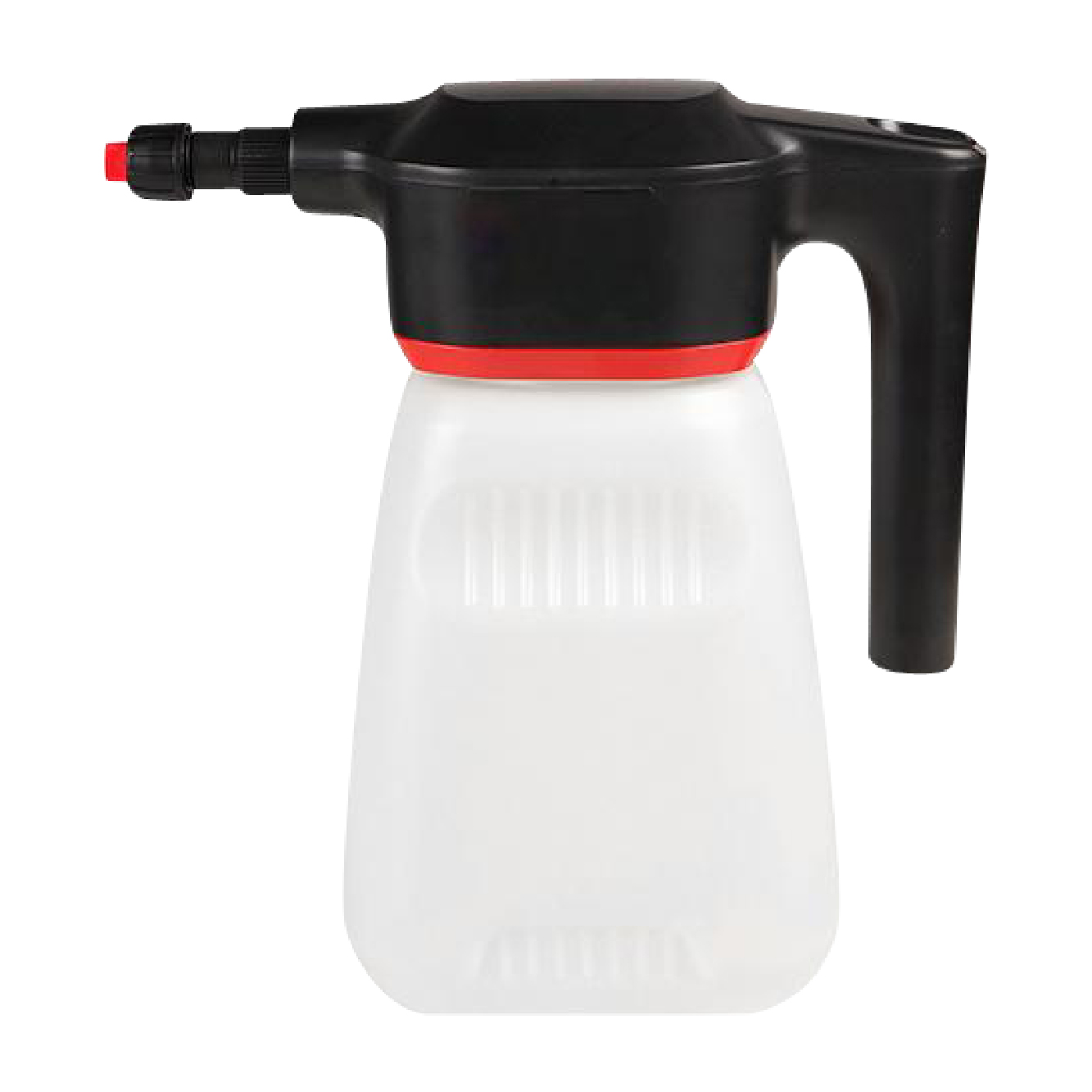
While foamers focus on surface cling, liquid applicators are built for direct, aggressive chemical delivery. Understanding their mechanics highlights why they remain indispensable for heavy-duty industrial tasks.
The primary mechanical difference is the complete absence of aeration. Solvent applicators do not push liquids through felt pads or air-injection nozzles. Instead, they deliver the substance as a direct, wet mist or a concentrated liquid stream. Engineers explicitly design these tools to handle harsh, fast-evaporating, or petroleum-based compounds. These specific chemicals physically cannot be aerated. Furthermore, they are required in their pure, undiluted state to function correctly. Because there is no air mixed in, the liquid hits the surface and immediately begins to penetrate, dissolve, or evaporate.
These tools handle aggressive substances like brake cleaners, tar removers, strong acids, and heavy degreasers. Standard plastics and rubber seals will quickly fail under these conditions. Picture a technician trying to degrease an engine block. If the internal seals melt, the pressurized solvent will leak. This creates a severe workplace hazard.
When applying harsh compounds, using a purpose-built chemical resistant cleaning sprayer is a strict operational requirement. Premium units feature high-density polyethylene tanks, stainless steel pump rods, and specialized O-rings. Without these heavy-duty components, harsh solvents will destroy standard Buna-N seals within days.
To effectively evaluate which tool aligns with your daily operational requirements, a direct comparison across critical performance metrics is necessary. Review the engineering breakdown below.
Performance Metric | Foam Application | Solvent / Liquid Application |
|---|---|---|
Dwell Time | Excellent. Clings to vertical surfaces for 5 to 10 minutes. | Poor. Liquids succumb to gravity and run off immediately. |
Visual Tracking | High visibility. White lather prevents overlapping sprays. | Low visibility. Clear liquids are hard to track on wet surfaces. |
Penetration Speed | Gradual. Relies on prolonged chemical suspension. | Instant. Pure chemicals immediately dissolve heavy grease. |
Aerosolization Risk | Low. Active ingredients are trapped inside bubbles. | High. Fine mists require strict ventilation and respiratory PPE. |
Best Used For | Vehicle exteriors, tiled walls, delicate surfaces. | Engine blocks, adhesive removal, fast-evaporating sanitation. |
For many modern maintenance operations, the foaming applicator has become the default choice. The specific advantages it offers directly impact both labor efficiency and material overhead.
The primary advantage is the ability to manipulate the physical state of the cleaning agent. Cleaning complex geometries, overhead ceilings, and sheer vertical walls is notoriously difficult. Liquid simply drips off before it can dissolve the contamination. By transforming the liquid into a dense lather, active surfactants remain suspended on the surface. This extended cling time does the heavy lifting. It emulsifies grease and lifts dirt without requiring excessive manual scrubbing from the technician.
From a commercial perspective, these tools offer an excellent return on investment through material conservation. The internal mechanism introduces a massive volume of air into the mixture. This expands the physical footprint of the product. A few ounces of concentrated cleaner can be aerated to cover an entire commercial vehicle. Professionals use significantly less raw product per square foot compared to liquid spraying. This directly translates to lowered overhead costs and higher profit margins.
In industries where surface scratching is a major liability, a thick lather provides a critical protective barrier. The foam acts as a robust lubricant. When operators use brushes or wash mitts to agitate the surface, bubbles encapsulate abrasive dirt particles. This allows the cleaning tool to glide smoothly across the exterior. It significantly reduces the risk of inflicting micro-scratches on delicate clear coats.
Despite the numerous benefits of aeration, it is not a universal solution. There are specific heavy-duty tasks where foaming will fall short. In these scenarios, direct liquid application is absolutely required.
Thick, baked-on grease, engine oil sludge, and road tar are highly resistant to standard foaming surfactants. These heavy contaminants require raw, undiluted petroleum-based or citrus-based solvents to break molecular bonds. By nature, solvents do not lather well. Attempting to push heavy hydrocarbons through an aerator will often destroy the delicate felt pads inside the nozzle. For heavy industrial degreasing, delivering a direct, concentrated liquid stream is the only effective method.
Certain professional tasks require compounds that act instantly and leave no residue. Brake cleaning, adhesive removal, and specific medical-grade sanitation protocols utilize alcohol-based or highly volatile formulas. The engineering goal here is for the compound to hit the surface, dissolve the target substance immediately, and evaporate into the air within seconds. Aerating these volatile formulas is counterproductive and often chemically impossible.
Recent analyses of the professional cleaning sector reveal a distinct shift in how facilities approach chemical application. Driven by stringent environmental regulations and a tightening labor market, operations are actively moving away from traditional high-volume liquid spraying. There is a surging trend toward foaming technologies to minimize chemical runoff into municipal wastewater systems. This aligns perfectly with global sustainability and water conservation goals.
Furthermore, ongoing labor shortages have catalyzed the adoption of automated equipment. Facility managers are increasingly recognizing that investing in ergonomic, battery-operated applicators reduces repetitive strain injuries. Transitioning from manual pumping to electric systems standardizes cleaning outcomes across varying skill levels, ensuring consistent quality regardless of the operator.
To make the best purchasing decision, you must look at how these tools perform within specific professional environments.
In the automotive detailing industry, the foaming applicator is the undisputed champion. Technicians heavily utilize it for the pre-wash stage. A thick layer is applied to the entire exterior to encapsulate and lift road grime before any physical contact is made. High-volume detailers invest in battery-operated units to ensure maximum efficiency. This allows workers to coat vehicles rapidly without the hand fatigue associated with manual pumping.
Facility maintenance requires a hybrid approach. A rich lather is exceptional for cleaning shower walls, tile grout, and large restroom floors. It clings to vertical tiles and breaks down stubborn soap scum. However, janitorial staff also rely heavily on liquid applicators. Tasks like streak-free glass cleaning, applying harsh non-foaming disinfectants to high-touch surfaces, and removing stubborn adhesives require direct liquid streams. Both tools are necessary for a fully equipped janitorial cart.
For broad outdoor applications, such as washing down agricultural equipment or sanitizing large livestock enclosures, a hose end foam sprayer is the most efficient tool. Featuring a 900ml reservoir and brass quick connectors, it leverages existing water pressure to cover massive areas quickly. Conversely, targeted weed or pest control requires specific, non-foaming herbicides applied directly to the soil. In those instances, a chemical-resistant liquid applicator is the required equipment.
Professional cleaning demands equipment that can withstand rigorous daily use. When evaluating tools, specifications go far beyond mere tank capacity. Purchasing a substandard unit leads to chemical leaks, inconsistent output, and frequent replacement costs. Follow these engineering guidelines for selection.
The most common point of failure in any pressurized tool is the degradation of its internal seals. When incompatible compounds interact with standard rubber components, seals swell, crack, or dissolve. Professionals must select units equipped with the appropriate seal material. Viton FKM seals are highly regarded for their exceptional resistance to harsh hydrocarbons, petroleum-based products, and industrial oils. In contrast, EPDM seals excel in environments where alkaline solutions, strong bleach, and alcohols are prevalent.
The mechanism used to pressurize the liquid dictates both output consistency and operator fatigue. Manual pump units require the operator to compress air into the tank physically. While highly portable, the pressure drops as fluid is expelled. This results in a gradual thinning of the lather. For high-volume operations, transitioning to an electric model represents a substantial productivity upgrade. Internal lithium-ion batteries drive a continuous pump, maintaining optimal internal pressure without any manual exertion.
Beyond seals and power sources, physical design dictates field usability. Tank volume must align with the intended task. A 1.5-liter handheld unit is ideal for targeted spot cleaning. A 5-liter to 8-liter shoulder-slung unit is required for washing commercial vehicles. A professional-grade unit must include an automatic pressure relief valve to prevent over-pressurization. Finally, high-quality models offer adjustable nozzles that seamlessly transition from a wide fan pattern for broad coverage to a concentrated cone for reaching tight crevices.
Choosing between foaming and liquid application ultimately depends on your specific task and the chemical compounds in use. Foam applicators maximize dwell time on vertical surfaces, provide essential lubrication, and drastically reduce chemical waste. Liquid applicators deliver raw, undiluted power for tough degreasing jobs and rapid spot treatments.
For the modern professional, having both tools in your arsenal is the most strategic approach. By understanding the mechanics and material requirements of each, you can invest in quality equipment. Whether that is a battery-powered aerator or a heavy-duty solvent sprayer, upgrading your gear will significantly improve cleaning efficiency, protect your staff, and boost your bottom line. Explore the full range of premium cleaning sprayers at ILOT China to find the exact specifications your operation demands today.
Applying harsh solvents through a standard foaming tool is highly discouraged. Engineers design these units with internal aeration pads specifically to mix air with water-based detergents. When aggressive petroleum-based solvents or heavy tar removers pass through these delicate components, they rapidly melt the inserts. This instantly destroys the foaming capability. Furthermore, solvents cause standard rubber seals to swell and fail. You must utilize a specifically rated applicator equipped with Viton seals for harsh solvents.
Yes, they yield a significant return on investment for high-volume operations. In industries such as professional auto detailing and large-scale facility maintenance, time directly equates to revenue. Manual pumping requires continuous physical exertion, slowing down the process and leading to operator fatigue. A battery-operated unit eliminates manual pressurization. It ensures a continuous, uninterrupted flow at a constant pressure, allowing operators to cover massive surface areas in a fraction of the time.
Proper maintenance is the sole determining factor in the longevity of any pressurized applicator. Even units built with high-grade Viton or EPDM seals will suffer premature failure if aggressive compounds are left to stagnate inside the tank. Always depressurize the tank immediately after completing a job. Safely dispose of any remaining solution and thoroughly rinse the interior with clean water. Crucially, spray clean water through the nozzle for at least thirty seconds to purge residual chemicals from the internal pump mechanism.
Absolutely. This type of attachment is a highly efficient tool for heavy-duty industrial cleaning, particularly when broad coverage is required over expansive areas. Unlike pump-up units that have a limited tank capacity, it attaches directly to a standard water supply. Operating on the Venturi effect, it automatically siphons concentrated chemical from the attached reservoir and mixes it with water and air. This automatic dilution mechanism is incredibly beneficial for rapid, continuous application over massive square footage.
When working with acid-based cleaners, such as aluminum brighteners or heavy descalers, you must use a sprayer specifically engineered for acid resistance. Standard metal pump rods and generic rubber seals will corrode almost immediately. Look for a sprayer equipped with EPDM seals, a heavy-duty high-density polyethylene tank, and non-corrosive plastic or fiberglass wands. Never use a sprayer with brass components when applying strong acids.
Yes. To generate a thick, shaving-cream-like lather, the chemical solution must contain high-foaming surfactants. Standard all-purpose cleaners or pure solvents lack the necessary chemical structure to hold air bubbles. If you put a non-foaming liquid into an aerating sprayer, it will simply spit out a watery, inconsistent mixture. Always pair your foaming equipment with specifically formulated "snow foam" detergents or high-foaming degreasers for optimal results.


