Views: 0 Author: Site Editor Publish Time: 2026-11-04 Origin: Site


Pest control operators and facility managers face unpredictable, grueling challenges every single day. One moment you are navigating a damp, restrictive crawlspace. The next, you are treating an expansive commercial warehouse perimeter. In this line of work, your equipment is your livelihood. A malfunctioning apparatus does not just cause a minor inconvenience. It translates directly to lost billable hours and wasted chemical formulations. Ultimately, field failures lead to unhappy clients who rely on your swift expertise.
Choosing the right rig comes down to understanding the engineering behind fluid delivery systems. You must evaluate tank materials, pump mechanisms, nozzle precision, and ergonomic design. This comprehensive guide breaks down exactly what structural and mechanical features you need to demand before making a capital investment in your operational toolkit.
Recent field data and regulatory shifts highlight a massive transformation in the pest management sector. The industry is moving rapidly toward strict Integrated Pest Management protocols. Environmental compliance is no longer just a buzzword; it is a strict legal requirement. Regulations are tightening around chemical runoff and non-target exposure. Consequently, the demand for high-precision, zero-leak application tools has skyrocketed.
The old days of "spray and pray" are over. Modern technicians must execute micro-targeted applications. Standard garden sprayers might suffice for casual weekend watering. However, commercial pest management demands specialized gear. This equipment must handle highly corrosive solvents and endure relentless physical abuse on the job site.
Material is Key: Upgrading to a stainless steel tank offers unmatched structural durability and impact resistance compared to standard consumer-grade plastics.
Seal Integrity Matters: Utilizing a chemical-resistant pump equipped with high-grade synthetic elastomers prevents dangerous leaks.
Precision Application: Deploying a multi-pattern nozzle allows professionals to instantly adapt to different environments, saving time and reducing chemical waste.
Ergonomics and Maintenance: Features like manual pressure relief valves, comfortable brass wands, and modular parts are non-negotiable for occupational safety.
The foundation of any application tool is its tank. The material housing your chemical solutions dictates the operational lifespan of the unit. More importantly, it dictates the safety of the technician carrying it. In the commercial arena, two primary materials dominate the market. Each serves very different operational needs.
High-Density Polyethylene is a common thermoplastic utilized heavily in entry-level professional equipment. The primary advantages of these polymer canisters are their lightweight nature and cost-efficiency. Furthermore, many of these tanks are semi-transparent. This transparency allows technicians to visually monitor liquid levels and dilution ratios on the fly without breaking the pressurized seal.
However, polymer tanks have inherent limitations in rigorous commercial settings. Prolonged exposure to ultraviolet light degrades the plastic over time. The material becomes brittle and prone to micro-fractures. Additionally, plastic tanks are significantly easier to puncture. Picture a fully loaded tank slipping from a wet tailgate or being dragged across rough concrete. Under such stress, standard plastics frequently crack.
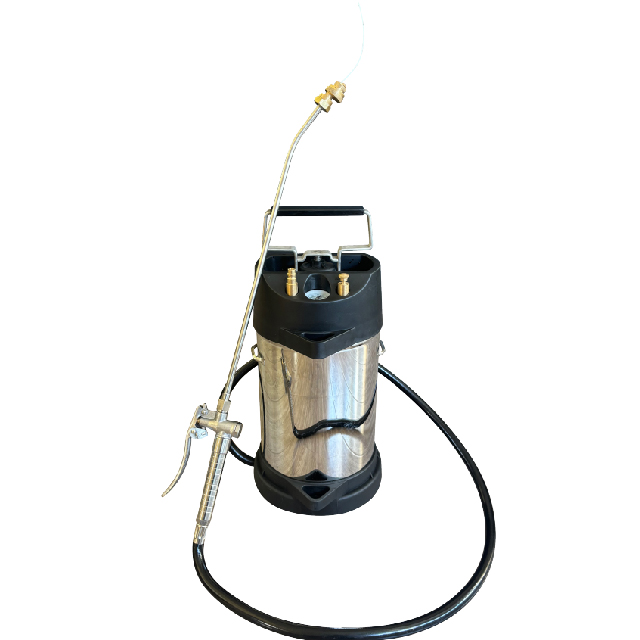
For operators seeking maximum longevity and peace of mind, metal is the undisputed industry standard. Investing in a premium stainless steel pest control sprayer provides exceptional resistance to extreme temperature fluctuations and blunt-force impacts. Specifically, tanks engineered from SS304 grade steel offer superior corrosion resistance. Your tank will bounce around the chaotic back of a utility vehicle alongside heavy wrenches and ladders. Under these harsh conditions, steel maintains its structural integrity where plastic would shatter.
Feature | High-Density Polyethylene | SS304 Stainless Steel |
|---|---|---|
Impact Resistance | Moderate; prone to cracking under heavy force | Exceptional; withstands drops and blunt force |
UV Degradation | High; becomes brittle over time | None; completely immune to UV damage |
Chemical Compatibility | Good for standard water-based formulas | Superior for harsh solvents and oil-based chemicals |
Long-Term Return on Investment | Low; requires frequent replacement | High; lasts for years with basic maintenance |
The pump mechanism serves as the beating heart of the sprayer. If it fails to build or maintain pressure, the entire tool becomes a useless paperweight. Interestingly, physical wear and tear rarely causes pump failure in pest management. Instead, chemical incompatibility is almost always the true culprit.
Standard rubber seals and gaskets are highly susceptible to chemical degradation. When exposed to oil-based pesticides, harsh petroleum distillates, or emulsifiable concentrates, basic rubber undergoes rapid chemical solvation. It will quickly melt, swell, or disintegrate entirely. This leads to immediate pressure loss. Worse, it causes hazardous chemical liquids to leak directly onto the operator.
To mitigate this severe risk, professionals must utilize a true chemical resistant pump sprayer. These specialized units are manufactured with premium synthetic materials like Viton or Teflon for all internal seals and O-rings. These advanced elastomers remain chemically inert when exposed to aggressive commercial pesticide formulations. Viton seals ensure the compression chamber stays airtight even after years of daily abuse.
Understanding internal pump mechanics is equally critical for matching your gear to your chemicals. Piston pumps operate via an internal cylinder that moves vertically to create pressure. They are highly efficient and generate higher pressure ratings. They are ideal for standard liquid formulations and herbicides. In contrast, abrasive wettable powders can score the inner walls of a piston cylinder, leading to premature failure. By choosing the right pump mechanism and seal material for your specific chemical loadout, you drastically extend the life of the internal components.
Application precision is just as vital as the tank holding the chemical. The nozzle is the final point of contact before the pesticide reaches the target environment. It dictates droplet size, fluid dynamics, and the overall success of the treatment protocol.
Modern application demands immediate versatility. A high-quality 4-way nozzle pest sprayer is engineered to provide multiple distinct spray patterns housed within a single, rotating brass or steel tip. Typically, these precision-machined settings include a pin stream for deep crack and crevice penetration, a fine mist for flying insect control, a coarse spray for heavy saturation, and a flat fan for broad surface coverage.
The practical application of a multi-pattern nozzle directly impacts your bottom line. Imagine a technician executing a broad baseboard perimeter treatment using a flat fan setting. Suddenly, they spot a tight wall void where German cockroaches are harboring. Instead of stopping, depressurizing the tank, and fumbling in their pocket for a new brass tip, they simply twist the nozzle collar to a pin stream. They neutralize the threat instantly.
This seamless adaptability saves valuable minutes on every single job site. More importantly, this exact precision ensures that toxic formulations are applied only where they are strictly necessary. It minimizes environmental runoff, slashes consumable chemical expenditures, and keeps your business fully compliant with modern regulatory standards.
Pest control is a physically demanding profession. Hauling pressurized liquid for eight to ten hours a day takes a significant toll on the human body. Therefore, selecting equipment with proper ergonomic design is essential for mitigating technician fatigue and preventing long-term musculoskeletal injuries.
Selecting the correct tank capacity optimizes workflow and minimizes physical strain. You must match the tool to the specific environment.
1-Gallon to 1.5-Gallon Models: These units are lightweight and highly maneuverable. They are perfect for indoor spot treatments, localized bed bug protocols, and tight attic spaces where a bulky tank would get snagged.
2-Gallon to 3-Gallon Models: These represent the bread and butter for standard residential perimeter defense. They offer enough capacity to treat an entire property without constant refilling.
4-Gallon Backpack Units: For massive commercial facilities or agricultural perimeters, backpack units become necessary. They distribute the heavy liquid weight evenly across the operator's core.
The delivery accessories connecting the tank to the nozzle must be structurally robust. A sturdy brass or stainless steel wand is imperative. Flimsy plastic wands flex under pressure and snap easily when accidentally stepped on. Furthermore, professional units feature comfortable, molded grip designs that prevent hand cramping during prolonged trigger depression. Heavy-duty, non-kink hoses ensure uninterrupted fluid delivery.
Handling toxic, chemically active formulations under high pressure introduces inherent occupational hazards. Professional-grade equipment integrates specific fail-safes designed to protect the operator, the client, and the surrounding property from accidental exposure.
A manual pressure relief valve is a non-negotiable safety component. Before opening a pressurized tank to refill liquid or perform routine maintenance, the internal kinetic energy must be safely neutralized. Attempting to unscrew the pump handle of a fully pressurized tank without a relief valve can result in a violent chemical blowback. This dangerous scenario can expose the technician's face and eyes to concentrated pesticides. A designated valve allows the user to safely vent compressed air away from their body.
Precision control requires a highly responsive trigger mechanism. Drip-free shut-off valves are designed to halt liquid flow the exact millisecond the operator releases the handle. Consider the liability of treating a high-end residential home. A cheap valve that allows residual chemicals to drip from the wand tip can permanently stain a client's Persian rug or damage expensive hardwood floors. Precision shut-off capabilities eliminate these costly property damage claims.
A professional tool is only as reliable as its repairability. Even the most resilient materials will experience wear and tear after thousands of application cycles. The distinction between a disposable consumer tool and a professional asset lies in maintenance protocols and parts availability.
Proper daily maintenance is the easiest way to extend the life of your gear. High-quality sprayers feature wide-mouth tank designs. This larger opening makes it significantly easier to pour chemicals without spilling. It allows you to completely empty the tank at the end of a shift and physically reach inside to scrub out chemical residues. Following a strict triple-rinse protocol prevents harsh solvents from sitting stagnant inside the pump cylinder overnight.
When an O-ring eventually degrades or a wand is accidentally crushed in a truck door, the entire unit should not end up in a landfill. A superior sprayer features a modular design. Reputable manufacturers offer comprehensive product catalogs and schematic breakdowns where professionals can easily source exact replacement parts. Access to check valves, upgraded wand extensions, and complete O-ring rebuild kits ensures the sprayer remains in active service for years.
For independent operators or budget-conscious facility managers, the temptation to procure an inexpensive sprayer from a big-box hardware store is high. However, empirical cost analysis consistently demonstrates that cutting corners on primary equipment leads to bleeding money in the long run. Consumer-grade sprayers are engineered for casual, seasonal use. When subjected to the daily rigors of commercial pest control, their thin plastic tanks warp. Their standard rubber seals dissolve upon contact with professional concentrates. The true cost of this cheap equipment includes frequent complete replacements, unbillable downtime spent unclogging hoses, and severe liability risks.
Dependable equipment drives operational success. In an industry where efficiency and precision dictate profitability, settling for subpar tools is a recipe for failure. Making smart purchasing decisions requires prioritizing robust tank materials, ensuring absolute chemical resistance in your pump seals, and leveraging the versatility of multi-pattern nozzles.
Take a moment to audit your current equipment today. Are you constantly battling pressure leaks? Are you replacing swollen O-rings every month? Are your technicians fumbling with inefficient spray tips? If so, it is time to elevate your operational standards. Invest in a professional-grade sprayer designed to work as hard as you do. Explore reliable, state-of-the-art stainless steel models and versatile nozzle systems from ILOT right now. Match the right capacity and engineering to your specific field requirements, streamline your daily operations, and protect your bottom line.
With proper daily maintenance, a high-quality stainless steel unit can last for many years. Proper maintenance includes thoroughly flushing the system with clean water and depressurizing the tank after every shift. By performing occasional, inexpensive seal and gasket replacements, these professional tools will significantly outlast cheap plastic alternatives. They provide an excellent return on investment over a decade of rigorous use.
It depends entirely on the internal components of your specific unit. You must ensure you are using a pump system equipped with seals specifically rated for highly corrosive materials, such as Viton or Teflon. Standard rubber O-rings and certain untreated metal components will be quickly oxidized and destroyed by bleach. Always consult the manufacturer's chemical compatibility chart before introducing harsh cleaning agents into your tank.
The primary benefits are operational efficiency and extreme application precision. A versatile nozzle design allows the user to seamlessly switch between a fine mist, coarse spray, flat fan, and pin stream with a simple twist of the wrist. This eliminates the tedious, time-consuming need to carry, track, and manually swap out multiple separate brass tips during a fast-paced job.
Pressure loss is rarely due to a cracked tank. It is usually caused by worn-out O-rings, a dirty check valve, or a degraded pump cylinder. When standard seals are exposed to harsh chemicals, they shrink, swell, or crack, allowing compressed air to escape. Upgrading to a professional sprayer equipped with high-grade, chemical-resistant seals prevents this premature wear and maintains consistent, reliable pressure throughout the workday.
Brass and stainless steel are the absolute best materials for a professional wand. These metals provide rigid structural integrity and can withstand high-pressure fluid delivery without warping. Plastic wands are highly prone to flexing, cracking under pressure, and snapping if accidentally dropped or stepped on during a busy job.
For heavy commercial use, it is best practice to rebuild your pump with a fresh O-ring kit annually. However, if you notice a sudden drop in pressure retention, or if the pump handle becomes unusually difficult to plunge, you should inspect and replace the seals immediately. Using chemical-resistant elastomers like Viton will stretch the time required between these routine replacements.


