Views: 0 Author: Site Editor Publish Time: 2026-08-20 Origin: Site


Treating mature fruit trees and tall ornamentals presents a serious operational hazard. Climbing unstable ladders with heavy equipment invites injury, while underpowered gear wastes time and expensive chemicals. Operators must balance vertical reach, chemical volume requirements, and physical fatigue. Applying dormant oils, pesticides, or foliar feeds to a 15-foot canopy demands specific fluid mechanics. Gravity constantly fights against your spray pattern. Wind drift scatters fine droplets before they hit the target leaves.
You need a reliable system to push liquids high into dense foliage. We evaluate the traditional trombone-style setup against the modern backpack unit. This technical breakdown covers pressure mechanics, reach capabilities, and field application scenarios. You will learn exactly which tool matches your specific orchard or garden layout based on real-world performance metrics rather than theoretical claims.
Reach vs. Mobility Trade-off: Trombone sprayers excel in vertical reach (theoretically up to 20 feet) and continuous volume, while backpack sprayers offer superior mobility and ergonomic operation for varied terrain.
Capacity Logistics: A trombone sprayer utilizes an external bucket, allowing for a virtually unlimited range of treatment and capacity, whereas backpack sprayers are strictly limited to their tank size (typically 4 gallons), requiring frequent refills for high-volume jobs.
Physical Demands: Backpack sprayers place static weight on the operator's back and shoulders; trombone sprayers require rigorous, repetitive two-handed upper body exertion to maintain pressure.
Application Specificity: Backpack sprayers are optimal for basilar tree spraying, vegetable gardens, and uneven terrain, while trombone sprayers are the superior tree garden sprayer for stationary, high-canopy drenching.
Pushing liquid 15 feet into the air requires significant mechanical force. A sprayer must overcome gravity while maintaining a tight, controlled spray pattern. If the pressure drops at the nozzle, the fluid column collapses. The liquid breaks into large, heavy drops that fall short of the canopy, wasting your mixture on the ground. You need enough velocity to penetrate dense outer foliage so the spray reaches the inner branches and trunk.
High-velocity delivery prevents excessive wind drift. Fine mists blow away easily, contaminating non-target areas and reducing the chemical's effectiveness on the tree. Heavy streams waste chemicals and cause immediate runoff. The ideal equipment delivers a consistent, medium droplet size at maximum vertical extension. Achieving this requires a pump capable of sustaining high pressure without constant fluctuation.
Different agricultural tasks demand different pressure levels. Thick fruit tree canopies require high, sustained PSI. You must force the liquid through overlapping leaves and dense branch structures. Standard vegetable gardens need much lower pressure. Ground-level shrubs require gentle application to avoid damaging delicate plant tissues or knocking off early blossoms.
High PSI ensures the chemical coats the underside of high leaves, which is where many pests hide during the heat of the day. Low PSI results in poor coverage, leaving dry spots where insects continue to breed. Your equipment must generate and hold the specific pressure required for your tallest targets. Viscous liquids like dormant oils require even more pressure to atomize properly compared to thin, water-based synthetic pesticides.
Safety forms the baseline of any spraying operation. Effective equipment must allow the operator to treat the entire canopy from the ground. Keeping both feet firmly planted on solid earth eliminates fall risks. Carrying a sloshing tank of liquid up an aluminum ladder alters your center of gravity. When you shift your weight to aim the wand, the liquid shifts with you, creating a severe tipping hazard.
Ground-based spraying also speeds up the application process. You eliminate the time spent moving, leveling, and stabilizing ladders on soft orchard soil. Ground operation keeps you safely away from the immediate chemical drift zone, allowing you to step back and let the wind carry the mist away from your face and body.
Application types dictate your volume needs. Dormant oil applications require high flow rates. You must thoroughly drench the bark to smother overwintering insects and eggs hidden in the crevices. This demands a massive volume of liquid per tree, often exceeding a gallon for a single mature apple tree.
Conversely, foliar feeding requires low-volume precision. You only need a light, even coating on the leaves until they glisten. High flow rates deplete small tanks rapidly, forcing you to stop and mix new batches constantly. Low flow rates make drenching tasks painfully slow. Matching your equipment's flow rate to your primary chemical application saves hours of labor over a single season.
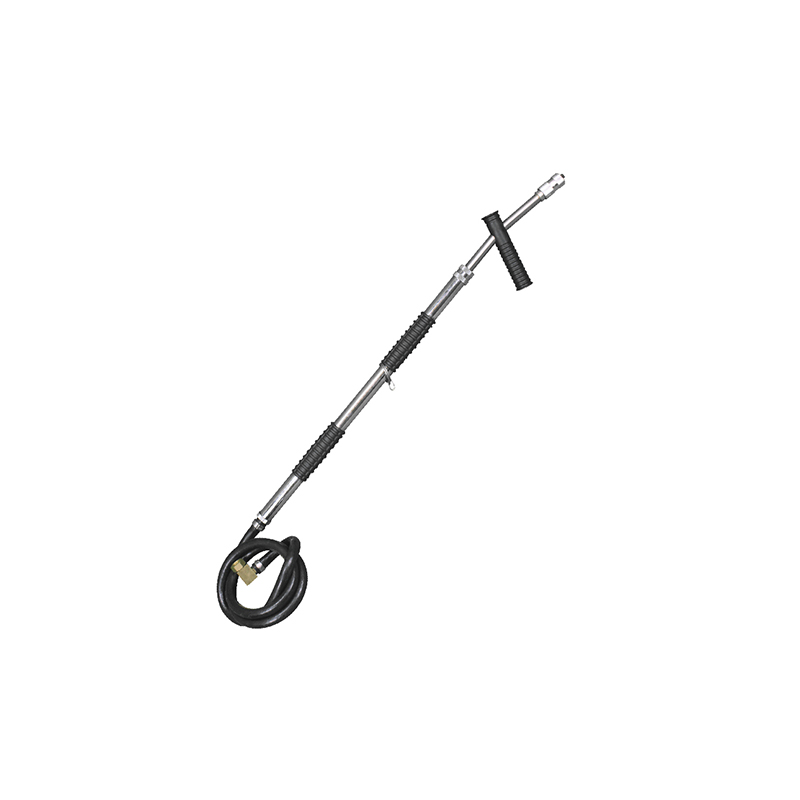
The slide-pump mechanism relies entirely on human power and fluid dynamics. It features a dual-action brass cylinder with internal check valves. You push and pull the handle to draw and expel liquid simultaneously. Because it is dual-action, fluid moves on both the forward and backward strokes. This manual action generates high PSI independently of a pressurized tank.
The faster and harder you pump, the higher the pressure climbs. This direct mechanical linkage provides immediate tactile feedback. You control the exact force of the spray stream by adjusting your physical effort. The heavy-duty brass construction withstands the high friction of continuous pumping and resists the corrosive effects of harsh agricultural chemicals, fertilizers, and wettable powders that would destroy cheaper materials.
This design offers massive advantages for tall targets. A fully primed Trombone Sprayer can theoretically reach up to 20 feet under perfect conditions. You can hit the tops of mature apple, pear, and cherry trees without leaving the ground. The logistical benefits regarding liquid volume are equally impressive.
You drop the weighted suction strainer directly into a 5-gallon bucket. For larger operations, you can drop the hose into a 50-gallon drum mounted on an ATV or garden cart. This eliminates the need to carry liquid weight on your back. You gain an unlimited treatment capacity per session. You mix one large batch of chemical and spray continuously until the container is empty, drastically reducing downtime.
Real-world application reveals several physical and logistical challenges. While theoretical reach hits 20 feet, realistic effectiveness peaks around 12 to 16 feet. Wind conditions, nozzle wear, and operator upper-body strength dictate the actual height you can effectively coat. Continuous two-handed pumping causes severe physical fatigue. Your arms, shoulders, and chest bear the entire workload, leading to rapid lactic acid buildup.
Hose management presents another obstacle. You remain tethered to a stationary bucket via a suction hose. This creates tripping hazards in dense orchards with tall grass. Moving around the tree requires dragging the hose and repositioning the bucket constantly. To mitigate these issues, operators should follow specific field practices:
Place the bucket on a wheeled utility cart to easily pull it around the tree perimeter.
Keep the suction hose under 10 feet to prevent excessive pressure drop and tangling.
Pace your pumping rhythm to maintain steady pressure rather than sprinting and burning out your muscles.
Ensure the weighted strainer remains fully submerged to prevent drawing air into the brass cylinder.
Backpack units utilize either manual levers or battery-powered pumps. Traditional manual models require continuous pumping with one arm while you aim the wand with the other. They use either piston or diaphragm pumps. Piston pumps generate higher pressure (up to 90 PSI) but struggle with abrasive wettable powders, which score the cylinder walls. Diaphragm pumps handle harsh, gritty chemicals better but produce slightly lower maximum PSI.
Modern battery-powered units eliminate manual pumping entirely. Powered by lithium-ion batteries, they maintain a constant, steady pressure throughout the application. Entry-level consumer models use cheap plastic pumps that degrade quickly. Pro-grade units feature robust Viton seals, brass wands, and heavy-duty motors capable of sustaining consistent PSI over long shifts without overheating.
Mobility stands out as the primary advantage of the backpack design. You wear the tank, leaving your hands relatively free to part branches or maintain balance. Operators navigate uneven terrain, steep slopes, and thick underbrush easily. You are not tethered to a bucket or a cart.
This makes the backpack unit the industry standard for low-level tasks. It excels at basilar bark treatments, where you apply herbicides or oils to the lower 12 to 18 inches of a tree trunk. You can walk from tree to tree rapidly. It also dominates vegetable garden maintenance. You can maneuver between tight rows of tomatoes or peppers without dragging hoses over delicate plants.
Carrying liquid requires serious load management. Water weighs roughly 8.3 pounds per gallon. A full 4-gallon tank adds over 33 pounds to your back, plus the weight of the sprayer itself. Pro-grade comfort features are mandatory for safety and endurance. Heavily padded harnesses distribute the weight across your shoulders.
Lumbar support protects your lower back from the hard plastic tank. Waist belts transfer the bulk of the weight from your shoulders to your hips, which are better equipped to carry heavy loads. Chest straps keep the load stable when you bend or twist. Proper ergonomics prevent acute injuries and long-term spinal strain. Cheap straps cut into your shoulders, restrict blood flow, and cause rapid fatigue.
Standard backpack units face a hard vertical limit. Most stock wands struggle to penetrate canopies above 10 to 12 feet. The internal pump pressure simply cannot overcome gravity and hose friction at that height. Operators often turn to aftermarket telescoping wands to bridge the gap.
These extensions push the nozzle closer to the target. However, adding a 10-foot wand introduces new problems. The extended hose length causes a noticeable pressure drop at the nozzle. The wand becomes heavy and difficult to control when fully extended, acting as a long lever that strains your shoulder. Battery-powered units handle these extensions better than manual pumps, but the reach deficit remains a core limitation for any standard Tree Garden Sprayer worn on the back.
Field Performance Comparison Data
Feature | Slide-Pump Style | Backpack Style |
|---|---|---|
Maximum Effective Reach | 12–16 feet | 8–12 feet |
Capacity Limits | Unlimited (External Bucket) | Typically 4 Gallons |
Primary Physical Strain | Arms and Shoulders | Lower Back and Spine |
Terrain Mobility | Poor (Tethered to bucket) | Excellent (Hands-free walking) |
Best Application Type | High-volume drenching | Precision low-level spraying |
The slide-pump mechanism wins the vertical battle. Under typical field conditions, you can reliably coat leaves at 12 to 16 feet. You generate massive burst pressure with aggressive pumping, forcing the fluid column higher before it breaks apart. Standard backpack models max out between 8 and 12 feet. Even with battery power, the internal pumps prioritize steady, continuous flow over high-velocity vertical reach. If your canopy sits above 12 feet, the backpack will leave the top branches untreated, allowing pests to survive and migrate downward.
Workflow efficiency differs drastically between the two systems. The slide-pump uses stationary buckets or mobile carts. You can mix 10, 20, or 50 gallons at once. You spray continuously until the container is empty. Backpacks force a strict 4-gallon limit. High-volume drenching empties a 4-gallon tank in minutes. You must stop spraying, walk back to your mixing station, take off the heavy pack, refill it, and hoist it back onto your shoulders. This repetitive cycle wastes time and drains your energy during large jobs.
The physical toll targets completely different muscle groups. The slide-pump action causes localized arm, chest, and shoulder fatigue. Pushing and pulling against fluid resistance burns out upper body muscles quickly. You must take frequent breaks to let your arms recover. The backpack shifts the burden to your skeletal system. You carry a static 30-plus pound load. This places continuous compression on your spinal discs and lower back. Walking on uneven ground amplifies this stress as the liquid sloshes. You must choose which type of physical strain your body handles better based on your own fitness and injury history.
Solid brass slide mechanisms offer incredible longevity in the field. They resist impact damage if dropped and withstand chemical corrosion from harsh fertilizers. You only need to replace the internal O-rings occasionally and keep the slide lubricated. Backpack units contain many more moving parts. Entry-level models use cheap plastic pumps and brittle seals. They crack under pressure and leak harsh chemicals down your back. Pro-grade models use Viton seals and stainless steel components. They last much longer but require regular lubrication, filter cleaning, and strict winterization to prevent the internal pump from freezing and cracking.
Choose the slide-pump mechanism if you manage a small number of mature trees. When your apples, pears, or cherries consistently reach 12 to 16 feet, vertical reach becomes your primary operational priority. You must avoid climbing ladders with chemical loads. Mobility between trees matters less when you only have a dozen trees to treat. You can easily drag a 5-gallon bucket from trunk to trunk. The high-velocity stream ensures you penetrate the dense upper canopy effectively, hitting the undersides of the highest leaves.
Invest in a pro-grade backpack unit for large acreage. If you cover acres of younger trees (8–10 feet), mobility dictates your success. You need to walk quickly over rough ground without tripping over suction hoses. This setup dominates ground-level applications. Basilar bark treatments require precise, low-pressure application around the trunk base to kill invasive species or manage growth. The backpack allows you to move swiftly through thick underbrush while maintaining total control over the wand tip.
Select the slide-pump for dormant oil tasks. Smothering overwintering scale, mites, and aphid eggs requires a heavy bark drench. You must coat every square inch of the trunk and branches until the liquid runs off. This consumes massive volumes of liquid. A standard 4-gallon tank depletes too rapidly for this work, forcing you into an endless cycle of refilling. Drawing directly from a large stationary container allows you to apply the necessary volume without constant, exhausting trips back to the mixing station.
Measure your tallest tree canopy using a laser measure or reference pole to determine your exact vertical reach requirement before selecting equipment.
Evaluate your orchard floor terrain to confirm if rolling a bucket cart is physically viable or if hands-free walking is necessary for your property.
Calculate your total liquid volume needs per application to decide between a strict 4-gallon tank limit and an unlimited external bucket system.
Inspect the availability of replacement Viton seals, brass nozzles, and O-rings for your shortlisted models to ensure long-term field serviceability.
A: While theoretical maximums claim 20 feet, realistic field reach falls between 12 and 16 feet. This depends heavily on the operator's pumping force, the specific nozzle setting, and ambient wind conditions. Stronger pumping generates higher PSI, pushing the liquid further against gravity before the stream breaks into a mist.
A: Stock wands cannot effectively reach 15 feet. You must add aftermarket telescoping wand extensions. However, extending the hose causes pressure loss, reducing droplet velocity. Battery-powered units handle these extensions slightly better than manual pumps, but reaching 15 feet remains a struggle for back-mounted units.
A: Manual calibration is challenging due to variable pump speeds. You must time your spray output into a measured container for one minute while maintaining a steady, realistic pumping rhythm. This establishes your average flow rate, allowing you to calculate chemical mixtures accurately for field application.
A: Yes, marginally. Battery-driven pumps provide consistent, sustained PSI without operator fatigue. This constant pressure improves vertical reach slightly and performs much better when pushing liquid through long telescoping wand extensions compared to the fluctuating pressure of manual lever pumping.
A: A high-quality backpack unit with a precision wand is vastly superior for basilar treatments. This task requires mobility, precise low-pressure control at the trunk base, and zero vertical reach. The backpack allows rapid movement between trees over rough terrain without dragging hoses.
A: No. Entry-level plastic models lack durability. They use cheap pump seals that degrade quickly when exposed to agricultural chemicals. They fail to sustain high PSI and feature unpadded straps that cause severe shoulder pain when carrying heavy liquid loads during long shifts.


