Views: 0 Author: Site Editor Publish Time: 2026-09-24 Origin: Site


Scaling a wobbly ladder to spray a tall oak tree poses massive safety hazards. Balancing a heavy chemical tank on shaky rungs often leads to dangerous falls. We understand this physical risk completely. Many property owners struggle to reach high branches safely. Homeowners and orchard managers need a reliable method to treat tall canopies, rooflines, and large properties. Enter the trombone sprayer. It offers a purpose-built, ground-level solution for high-reach applications. You can stay planted safely on solid ground while applying critical treatments. This comprehensive guide breaks down realistic reach limits and pressure mechanics. We also cover crucial evaluation criteria and common operational pitfalls. You will learn exactly how to determine if this manual tool fits your specific property requirements. By the end, you can make an informed, safety-first equipment choice.
Realistic Vertical Reach: Expect a maximum effective vertical reach of 25 to 30 feet, heavily dependent on the operator's physical exertion and wind conditions.
Mechanism Dependency: Operates via a continuous push-pull "slide pump" action; pressure is completely reliant on manual user input rather than pre-pressurized tanks.
Build Material Cruciality: Opting for a metal trombone sprayer (typically brass) is critical for enduring high pressure and caustic chemical resistance over time.
Best Use Cases: Ideal for targeted, high-reach applications like dormant oils on fruit trees or localized pest control, rather than broad-acre spraying.
Understanding how this equipment functions helps you maximize its potential in the field. The internal design relies on simple fluid dynamics. It converts human kinetic energy into fluid pressure. We will examine the specific steps driving this process.
The core mechanism operates on a continuous push-pull cycle. We call this the slide pump action. Let us break down the exact mechanical sequence:
The operator pulls the main slide handle backward.
This backward motion creates a vacuum inside the brass cylinder.
An internal piston draws liquid up through the external suction hose.
The operator then pushes the handle forward forcefully.
Internal check valves close, preventing liquid from flowing backward.
The system forces the trapped liquid out through the front nozzle.
This rapid push-pull rhythm generates near-continuous pressure. You do not wait for a tank to pressurize. The fluid moves as long as you keep pumping.
Standard backpack models restrict your capacity to four or five gallons. Carrying heavy liquid strains your lower back over time. This unique tool removes that physical burden completely. You draw directly from a separate bucket or reservoir resting on the ground. It eliminates the weight constraints associated with traditional equipment. You simply drop the weighted brass strainer into your mixture. You can treat an entire orchard without carrying the chemical weight on your shoulders.
Many manufacturers advertise impressive PSI ratings on their packaging. We must clarify a fundamental truth regarding these numbers. Maximum pressure correlates directly to operator strength and stamina. Do not assume a flat PSI metric applies universally. The human element dictates the actual output at all times. If you tire out, the pressure drops significantly. Using a high pressure garden sprayer requires noticeable cardiovascular effort. You generate the force entirely through manual labor.
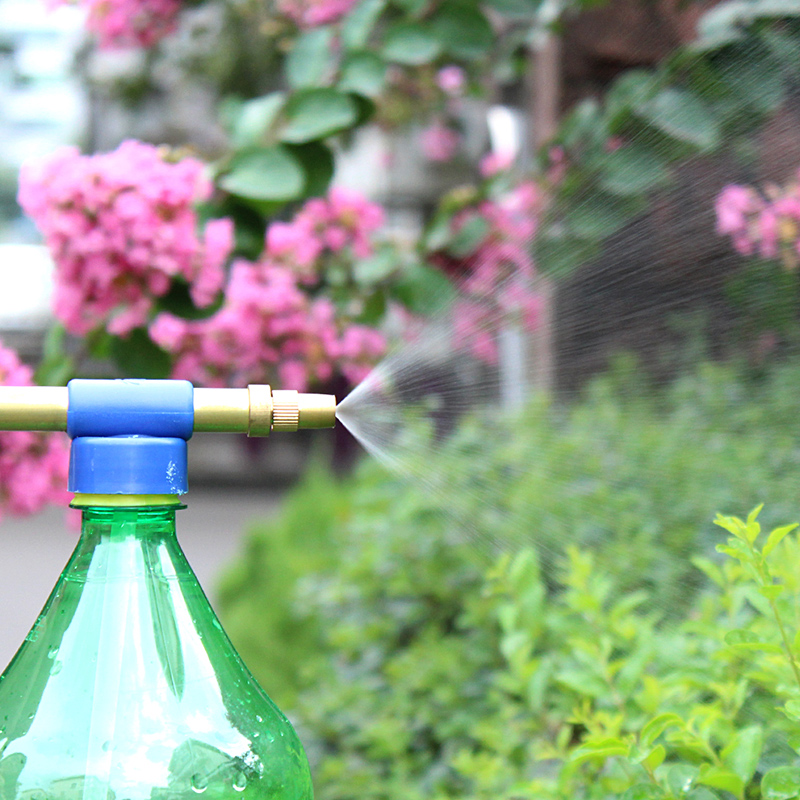
Property owners often overestimate how far liquids can travel against gravity. Establishing realistic performance benchmarks prevents post-purchase frustration. We will analyze the true vertical and horizontal limits.
Let us examine realistic vertical reach metrics first. You might wonder how high the liquid actually travels. Vertical reach peaks around 25 to 30 feet. Hitting this maximum requires ideal, windless conditions. You must use a pinpoint stream setting. Reaching the top of a mature canopy demands peak physical effort from the operator. Horizontal reach performs slightly better due to gravity. You can shoot a targeted stream over 30 feet horizontally. This horizontal distance helps when treating dense, thorny brush from a safe zone.
Your chosen nozzle setting directly dictates overall performance. Transitioning from a fine mist to a solid stream alters everything. A fine mist works perfectly for foliage coverage at close range. It coats leaves evenly. However, fine mist loses momentum quickly in the open air. A solid stream maximizes your overall height and distance. It retains kinetic pressure better. The tradeoff is larger droplet sizes. Large droplets may run off smooth leaves faster. You must carefully balance reach against coverage quality. A high-quality tree sprayer offers smooth transitions between these modes.
Several external factors reduce your effective reach over time. Wind drift remains your biggest environmental enemy. A mild headwind instantly destroys a 30-foot vertical stream. Chemical viscosity also plays a major role in distance. Thick horticultural oils require more force to push through the nozzle. Thin water-based mixtures travel further with less effort. Finally, pump fatigue inevitably sets in. As your arm muscles tire, your effective reach gradually decreases. Plan your application strategy around these physical limitations.
Material selection determines whether your equipment survives one season or ten. High-pressure applications destroy weak materials quickly. We advise carefully inspecting the construction before purchasing.
Cheaper models rely heavily on lightweight plastic components. Plastic cracks under the immense stress of high PSI. It also degrades quickly when exposed to direct UV sunlight. In contrast, brass mechanisms offer superior longevity. They endure rigorous pumping motions without warping or snapping. Choosing a metal trombone sprayer ensures your tool survives harsh agricultural environments. Brass strongly resists corrosion from harsh chemical fertilizers and dormant oils.
Material Performance Summary
Feature | Brass / Metal Construction | Plastic Construction |
|---|---|---|
Durability Under High PSI | Excellent - Resists cracking and warping | Poor - Prone to hairline fractures |
Chemical Resistance | High - Handles harsh oils and fertilizers | Moderate - May degrade over time |
Weight | Heavier - Requires more effort to hold | Lightweight - Reduces initial arm strain |
Expected Lifespan | 10+ Years (Properly maintained) | 1 to 3 Years |
The heavy metal body only tells half the story. Internal seals dictate whether the tool functions at all. Chemical-resistant Viton O-rings remain essential for long-term success. Cheaper rubber seals dissolve quickly when exposed to harsh pesticides. The pressure fails instantly if internal seals degrade. You will experience messy leaking and total pressure loss. Always verify the manufacturer uses premium, chemical-grade internal gaskets.
Proper care extends the lifespan of your equipment significantly. Neglect ruins even the best brass tools. You must flush the system thoroughly after every single use. Run clean water through the pump until it sprays entirely clear. We recommend performing a three-step rinse for thick oils. Occasionally lubricate the slide mechanism to prevent sticking. Use a pure silicone-based grease to keep the action smooth. Petroleum jelly can damage sensitive O-rings over time. Proper maintenance guarantees your peak spray distance remains consistent year after year.
Property owners often weigh different equipment options before investing. Let us compare this tool against common market alternatives. Finding the right long reach sprayer depends heavily on your specific property layout.
Trombone Sprayers: They boast the lowest cost for achieving high vertical reach. They require absolutely zero reliance on lithium batteries or gas motors. They operate silently. Drawback: High physical fatigue affects the user quickly. They also require managing a stationary bucket and long hose setup.
Battery-Powered Backpack Sprayers: These provide consistent, fatigue-free PSI for the operator. They remain highly mobile across large, uneven properties. Drawback: They often cap out at 15 to 20 feet vertically. Reaching higher requires specialized extension wands. They carry a much higher upfront cost and require battery management.
Hose-End Sprayers: These offer an infinite liquid supply straight from your garden spigot. They remain highly affordable for average residential homeowners. Drawback: Chemical dilution ratios are notoriously inaccurate. Your maximum reach remains strictly limited to your municipal water pressure.
We recommend manual slide pumps for very specific scenarios. They suit homeowners or orchardists managing three to ten mature trees. They work perfectly for occasional, targeted treatments in residential spaces. If you run a massive commercial farm, upgrade to gas-powered rigs. For localized high-reach tasks, the slide pump remains an unbeatable value proposition.
Using ground-level equipment introduces unique logistical challenges. You must prepare your work area carefully. We highlight common operational risks below.
Managing the setup requires some basic logistical planning. You must manage a long 25-foot suction hose effectively. This hose attaches to a heavy 5-gallon bucket of chemical mixture. Dragging this bucket across uneven terrain creates severe mobility friction. You face the constant risk of hose kinking around trees. A kinked hose immediately disrupts your internal pressure. We advise placing the bucket centrally and working in a circular radius. Move the bucket only when necessary.
We must be highly transparent about the physical effort involved. Maintaining a 30-foot stream demands intense cardiovascular exertion. Your shoulders and arm muscles will burn after just a few minutes. This fatigue factor severely limits how long you can operate continuously. Plan your spraying sessions in short, focused bursts. Take frequent breaks to maintain optimal pressure levels. Do not attempt to spray an entire orchard in one session.
Drawing chemicals from an open bucket introduces serious new risks. You face a high splash-back risk while moving around uneven ground. Sloshing chemicals can easily contact your skin or eyes. We highly recommend using lidded buckets equipped with tight hose ports. This simple upgrade prevents dangerous spills during transport. Always wear proper personal protective equipment. This includes chemical-resistant gloves, safety goggles, and long sleeves.
A manual slide pump remains incredibly effective for specific horticultural tasks. It stands as a premier low-tech tool for achieving extreme heights. You can successfully hit a 30-foot vertical stream without ever climbing a dangerous ladder. It provides excellent, reliable value for targeted property maintenance.
Assess your own physical readiness before committing to this demanding tool. Verify the chemical compatibility of your planned orchard treatments beforehand. Ensure you purchase a durable, brass-constructed unit for maximum longevity. Prepare your safety gear and transport buckets accordingly. You are now fully equipped to tackle high-reach spraying safely and efficiently.
A: Yes, but wettable powders require very careful handling. They do not dissolve fully and tend to settle rapidly. You must maintain constant agitation inside the supply bucket. Stir the mixture frequently to prevent the heavy powder from clumping. If left unsettled, the powder will quickly clog the suction strainer and internal check valves.
A: Output generally ranges from 60 to 150 PSI. However, this metric depends entirely on user effort. The harder and faster you pump, the higher the pressure climbs. As your arms tire, the PSI naturally decreases. There is no automated motor maintaining a constant baseline pressure.
A: We strongly advise against lengthening the factory-supplied hose. Extending the hose significantly increases the required suction lift. The manual pump must work much harder to draw liquid upwards. This extra mechanical strain drastically reduces your output pressure and total reach. Stick to the standard hose length for optimal performance.


